

Upcoming Events
Join the 2019 TSMC Technology Symposium and get first-hand updates on TSMC's advanced and specialty technologies, manufacturing capabilities and future development plans! For more information, please click here

 TSMC Europe OIP Ecosystem Forum, Amsterdam, Netherlands, 2019/5/27
TSMC Europe Technology Symposium, Amsterdam, Netherlands, 2019/5/28
TSMC Israel Technology Workshop, Herzliya, Israel, 2019/6/26
Latest TSMC News

In 2018, smartphone accounted for approximately 45% of TSMC’s wafer revenue; High-performance computing about 32%; Internet of things 6%; automotive 5%; digital electronics 6%; and “others” made up the remainder.

7nm capacity will continue to ramp through 2019. Customer tape-outs at 7nm process technology continue to be strong, and we are seeing an increase in silicon content for AI and 5G-related product designs. 7nm plus yield rate is progressing well and comparable to 7nm. It is on schedule for volume production in the second quarter of 2019.

5nm technology development is well on track, with customer tape-outs scheduled for first half 2019 and volume production ramp in first half 2020. All applications that are using 7nm today will adopt 5nm, and TSMC is confident it will be a long-lasting node.
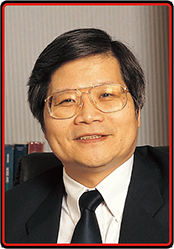
Dr. C.C. Wei,
CEO & Vice Chairman
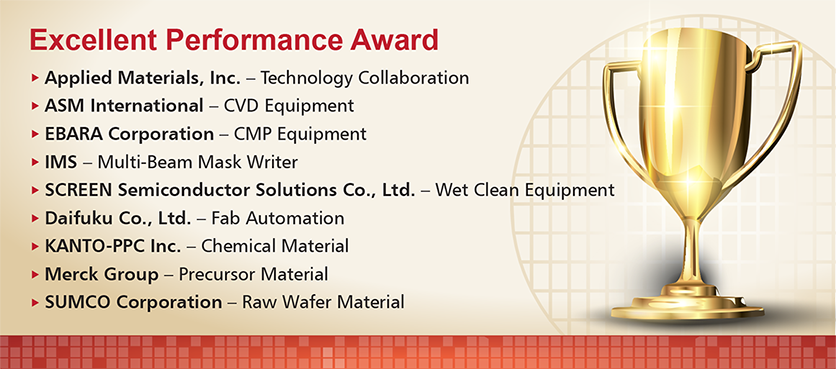
TSMC held its 18th annual Supply Chain Management forum in December 2018 to show appreciation for the support and contributions of its suppliers. In 2018, TSMC successfully brought its industry-leading 7nm technology to volume production and made significant progress in preparing for risk production of 5nm technology. To highlight the role played by suppliers in these and other achievements, TSMC recognized 9 outstanding equipment and materials suppliers with its Excellent Performance Award.
“Our suppliers play a key role in our unceasing efforts to enable semiconductor innovations with the right technology and right capacity at the right time,” said TSMC Chief Executive Officer Dr. C.C. Wei. “We are grateful for their ongoing support as we work together to push the limits of technology while raising the industry’s standards for sustainability as committed corporate citizens.”
The outstanding suppliers recognized by TSMC for their performance are as follows:
Green Manufacturing Bulletin
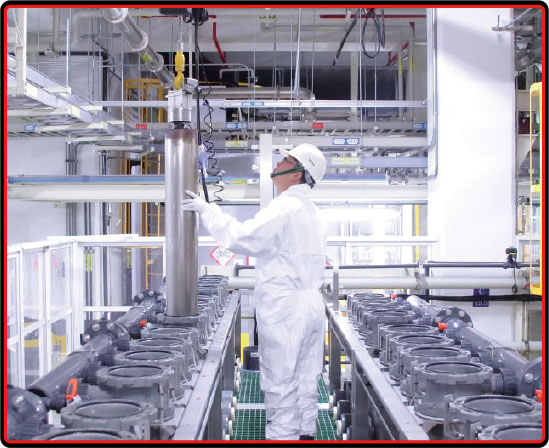
Extracting recycled copper tubes
TSMC is dedicated to sustainable value creation, and incorporates the concept of “circular economy” into its long-term strategies and sustainable development goals. In our effort to put the ideas of circular economy into real-world practice, we reached an industry first in recycling copper waste liquid.
In 2016, TSMC collaborated with suppliers to build in-house recycling facilities to replace outsourcing of copper sulfate treatment. Next in 2017, the company further cooperated with raw material suppliers to process TSMC's regenerated copper tubes into electronic-grade copper anodes. Building on these successes, in 2018, we achieved true circular economy by becoming the first in the industry to successfully return regenerated electronic-grade copper anodes to our own semiconductor manufacturing process for reuse.
TSMC is applying the same model to other waste materials as well. Last year, we successfully recycled ammonia nitrogen wastewater into industrial-grade ammonium sulfate through a low-temperature evaporation crystallization process. In 2019 to 2020, we hope to once again achieve circular economy by working with suppliers to convert ammonium sulfate into electronic-grade ammonia water that can be reused by TSMC’s fabs. Similar projects are also in place for waste sulfuric acid, waste isopropyl alcohol, waste cobalt sulfate, and waste hydrogen fluoride.
For other case studies on TSMC’s initiatives in sustainability and other corporate social responsibilities, please see our CSR website at: https://www.tsmc.com/csr/en/resources/spotlight.html